.webp)
Migration & delivery
Jira Product Development
Workflows, boards and automation retuned around how the team actually ships software.

01
The challenge
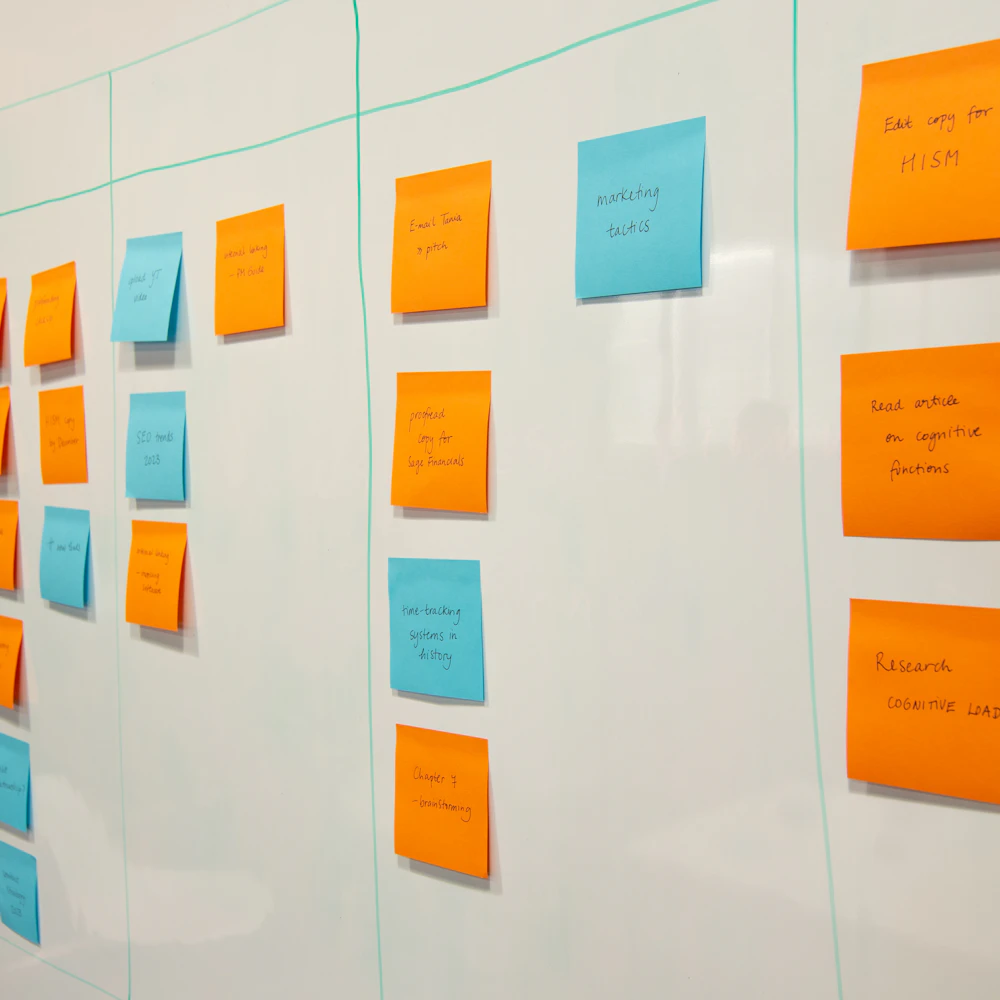
Great product teams don't fail for lack of effort — they stall when their tools fight the way they actually work. This fast-growing software company was shipping on a Jira setup that had drifted out of sync with how they build: boards that didn't match their flow, workflows that created busywork, and manual steps where automation belonged.
Jira was in place, but it was getting in the way. Workflows were inconsistent across teams, pulling development efforts out of alignment. Backlogs were overloaded with hundreds of unprioritized tickets. There was no real-time visibility into sprint progress, so product releases slipped. And the developer experience was poor, with excessive manual updates eating into productivity. Agile teams struggled to meet sprint commitments and product managers had no clear insight into where the bottlenecks were — the process lived in people's heads, not in the system.
02
Our approach
We didn't start by rebuilding Jira; we started by understanding how the team actually ships. A full Jira assessment covered their workflows, backlog management and sprint planning, and we mapped the real development flow — idea to backlog to in-progress to done — before rebuilding the Jira model to match it, rather than bending the team to a stock template.
From there: standardized, repeatable workflows defined with product and engineering leaders for each team — backend, frontend and DevOps — with customized issue types, statuses and transition rules so features, bugs and technical debt were handled consistently. A structured backlog triage archived outdated tasks and categorized work with priority labels, backed by WIP limits and a grooming cadence. Automation rules removed the repetitive work, including auto-assignment based on workload distribution, and a Slack integration pushed real-time sprint updates and blocker notifications to where the team already talks.
When the tool matches the team, the team gets faster.
03
What we built
- Boards that mirror the real flowScrum and Kanban views tuned to how the team plans and executes, so the board reflects reality at a glance.
- Standardized workflows without the busyworkStatuses and transitions matched to actual development stages across backend, frontend and DevOps.
- A triaged, governed backlogOutdated work archived, priority labels applied, and WIP limits plus a grooming cadence to keep it that way.
- Automation that moves work for youRules handling repetitive transitions, assignments and notifications, including auto-assignment by workload.
- Slack integrationReal-time sprint updates and automated blocker notifications in the channel the team already uses.
- Real-time dashboardsSprint velocity, cycle time and bottleneck tracking, plus a burn-down strategy so teams can adjust commitments dynamically.
04
The results
What changed once the setup matched the way the team builds.
- 30% reduction in cycle timeFor feature releases — faster innovation without cutting corners.
- 40% increase in on-time sprint completionPredictability the team and its stakeholders could plan around.
- Higher developer satisfactionAutomation absorbed the manual updates that used to interrupt the work.
- Improved stakeholder alignmentReal-time insight into project status, so standups and planning ran on facts instead of guesswork.
05
In their words
Boards that match how you ship
Make Jira fit how you build
If your team is working around Jira instead of with it, the fix is rarely a new tool — it's a setup designed around your real development flow. We'll tune it to how you ship.