.webp)
The Idea Whisperer Meets the Sprint Master: How JPD and Jira Software Tag-Team Your Roadmap
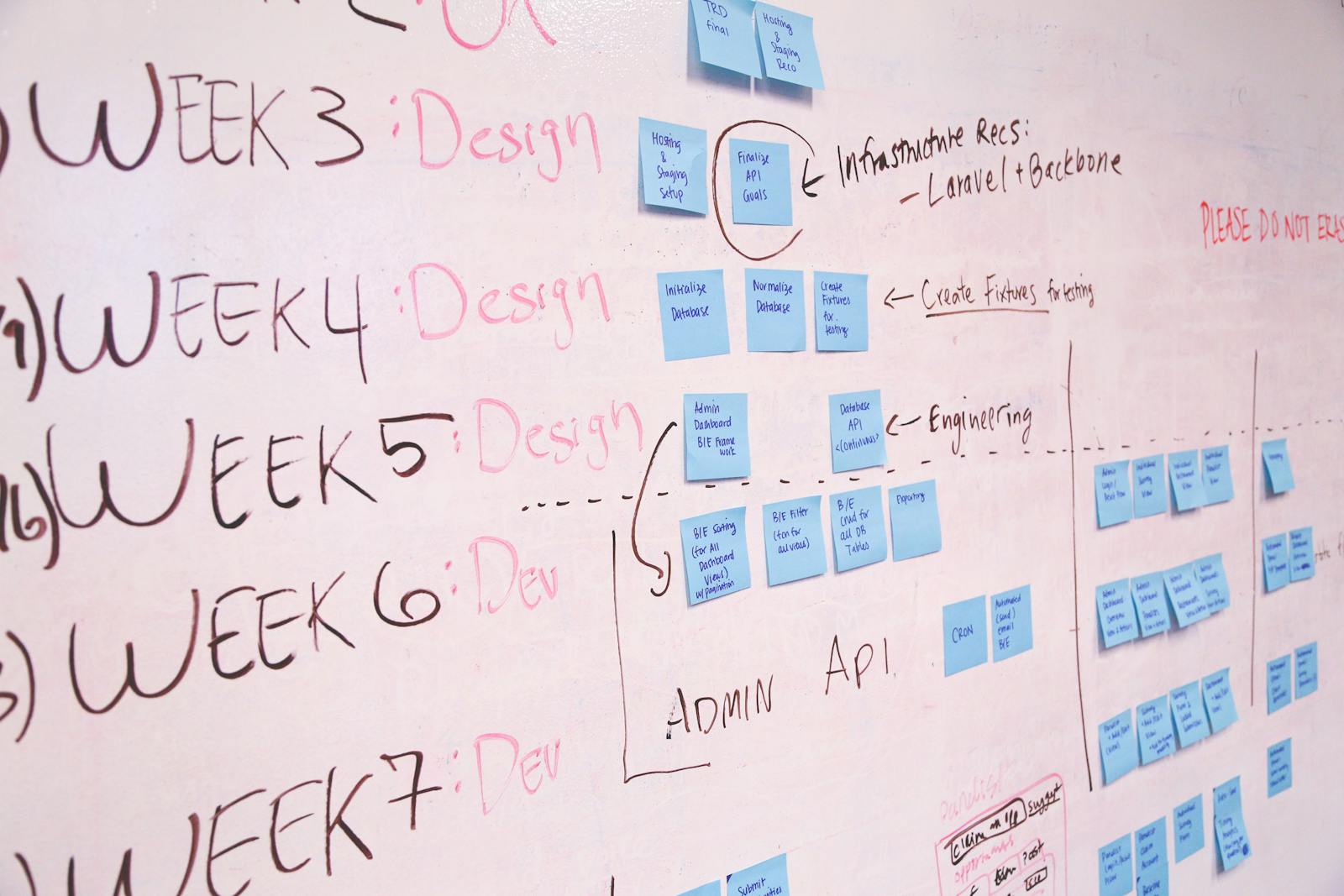
Every product manager I've ever met has at some point opened a spreadsheet, stared at 247 rows of "great ideas," and quietly wondered if they should just start a llama farm in Wisconsin instead.
I get it. The pain isn't a lack of ideas — it's the gulf between "this would be amazing" and "this is in production." For years, product teams have lived in one tool to think, another to plan, a third to spec, and a fourth to actually build. By the time an idea reached engineering, half its context had evaporated like coffee in a sprint-planning meeting.
That gulf is exactly what Atlassian closed when they wired Jira Product Discovery directly into Jira Software. And as a Solutions Partner who spends a healthy chunk of every week watching teams discover this connection for the first time, I can tell you — the reactions range from "wait, that's it?" to "where has this been all my life?"
Let me walk you through it.
JPD: where chaos earns its way onto the roadmap
Jira Product Discovery is Atlassian's home for the messy, beautiful, pre-roadmap chaos. It's where customer feedback gets captured, ideas get scored, opportunities get compared, and roadmaps get built. Think of it as the strategy whiteboard your team always wished it had — but one that doesn't get erased on Friday afternoons.
Inside JPD, you're working with ideas, not tickets. You can tag them, score them with custom fields, prioritize them with RICE or ICE or your own brand of arithmetic alchemy, and roll them up into views tailored for executives, customers, or that one stakeholder who only wants to see things in dark mode.
Jira Software: where ideas grow up and ship
Jira Software, on the other hand, is the engine room. It's where epics get broken into stories, stories get broken into tasks, and tasks get broken into a developer's afternoon. Sprints, backlogs, boards, releases, dependencies — it's the operational machinery of getting code out the door.
Either tool is powerful on its own. Together, they're a different animal entirely.
The magic happens in the Delivery panel
Inside any JPD idea, there's a Delivery panel on the right side. From that panel, you can either create a brand-new epic or task in Jira Software, or link to one that already exists. The link is bidirectional — JPD knows about Jira, and Jira knows about JPD.
A few details I love:
- One idea, many epics. You can link a single idea to multiple epics across multiple Jira Software projects. Big initiatives don't get squeezed into one team's lane.
- Your math, your call. Choose your delivery progress calculation — by issue count or by story points. Either way, JPD displays a progress bar inside the idea that reflects what's actually happening in delivery.
- Context comes along for the ride. Embed the idea's description and fields straight into the new epic, so engineers don't have to swivel-chair between tools to understand why they're building what they're building.
- Cloud and Data Center, side by side. Premium plan users can connect JPD to Jira Data Center instances — a huge win for enterprises straddling Cloud and on-prem.
Why this matters — the trusted-advisor take
Here's where I'll pull on my Avaratak hat for a moment, because the integration isn't just a feature. It's a different operating model.
When discovery and delivery live in separate tools, you get something I call "context loss tax." Every hand-off costs information. A PM writes a brilliant idea doc; an engineer reads a stripped-down ticket; somewhere in between, the why goes missing. Multiply that by a year of work, and you've built a roadmap of features nobody quite remembers asking for.
When the two are connected, the why travels with the work. An engineer opening a Jira epic sees the linked idea, the original customer insights, the priority score, and the strategic context — without leaving Jira. A PM watching the JPD idea sees real-time delivery progress without DM'ing the engineering manager for the third time that week.
That's not just convenience. That's organizational memory.
Three patterns we recommend at Avaratak
Three patterns I find myself recommending to clients constantly:
One idea, many epics. If you're shipping something cross-functional — say, a billing redesign that touches web, mobile, and backend — link one JPD idea to one epic per team. The delivery progress bar gives leadership a single number to watch instead of three Slack threads to chase.
Insights before commits. Use Jira Service Management as an insights pipeline into JPD. Customer feature requests flow from JSM into JPD as raw signal. Nothing moves to Jira Software until the idea has earned its way onto the roadmap. The result: a clean Jira backlog where every item is genuinely committed work, not aspirational debris.
Embed JPD views in Confluence. Stakeholders rarely want to log into another tool. Drop a JPD roadmap view into a Confluence page, wrap it in narrative context, and you've got a living strategy doc that updates itself.
The forward-thinking bit
The trajectory here is worth paying attention to. Atlassian is steadily collapsing the seams between strategy, planning, and execution. JPD ideas now show up directly in Jira Plans. AI features are being layered onto insights capture and roadmap synthesis. The tools are evolving toward something that feels less like a stack and more like a single fabric.
For teams still running discovery in spreadsheets and delivery in Jira, the migration is cheaper and easier than most expect. The hard part isn't the tooling — it's the habit change of letting ideas earn their way to delivery instead of arriving there by political momentum.
The bottom line
If your roadmap currently lives in three documents, four tools, and the heads of two senior PMs who happen to be on vacation, the JPD-and-Jira-Software pairing is one of the highest-leverage moves you can make this quarter. Less context-switching, more context-keeping. Less "what were we building again?", more "when does this ship?"
That's the kind of clarity we love helping our clients find at Avaratak. If your team's discovery-to-delivery flow feels more like a game of telephone than a relay race, we'd be happy to chat. We bring the playbook. You bring the ideas.